
Announcements
ADRA Bosne i Hercegovine pokreće besplatan kurs bosanskog jezika za žene tražiteljice azila i osobe pod međunarodnom zaštitom
07/22/2026
Ministry of Human Rights and Refugees
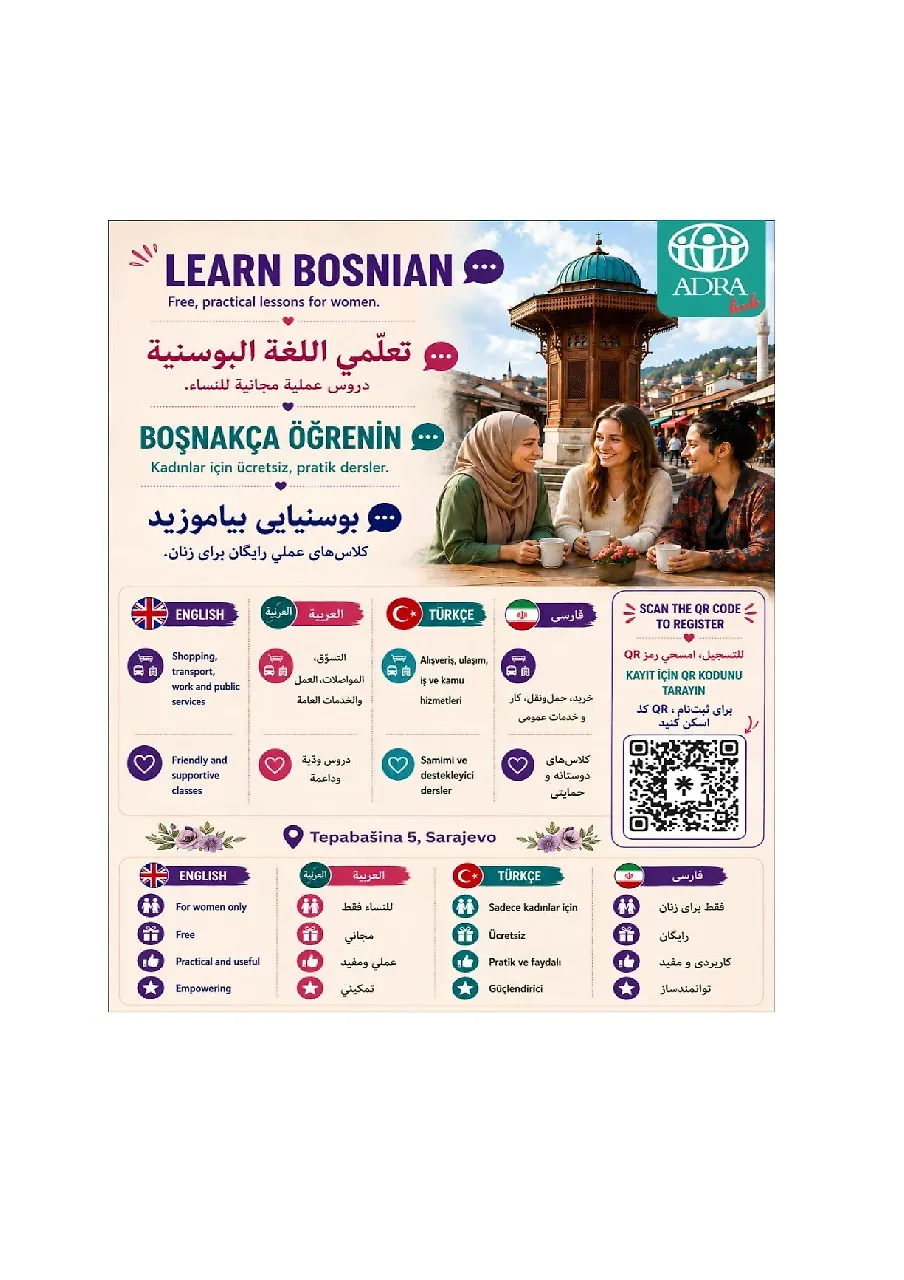
ADRA Bosna i Hercegovina pokreće pilot-projekat besplatnog početničkog kursa bosanskog jezika namijenjenog ženama koje su tražiteljice azila ili imaju odobrenu međunarodnu zaštitu u Bosni i Hercegovini.
Kurs počinje 6. augusta 2026. godine i održavat će se u prostorijama ADRA HUB-a (Tepebašina 5, Sarajevo). Program traje šest sedmica, uz jedan 90-minutni susret sedmično, a namijenjen je grupi do devet učesnica početnog nivoa (A0–A1). Učesnicama će biti osigurani besplatni nastavni materijali.
Pored usvajanja osnova bosanskog jezika kroz teme iz svakodnevnog života, program uključuje i aktivnosti koje doprinose upoznavanju lokalne zajednice i lakšoj integraciji u društvo.
Ukoliko se pilot-projekat pokaže uspješnim, ADRA planira nastaviti s organizacijom redovnih kurseva i pratećih aktivnosti tokom jeseni.
Ministarstvo za ljudska prava i izbjeglice Bosne i Hercegovine podržava ovu inicijativu i poziva institucije i organizacije koje rade sa tražiteljicama azila i osobama pod međunarodnom zaštitom da informaciju o kursu podijele s potencijalnim učesnicama.
Prijava za kurs vrši se skeniranjem QR koda na promotivnom posteru, koji je dostupan na bosanskom, engleskom, arapskom, turskom i farsiju.
Dodatne informacije dostupne su putem e-mail adrese kontakt osobe ADRA Bosne i Hercegovine: kerner.karin@gmail.com.
Bosnian Language Classes for Everyday Life
Community-Based Integration Pilot Initiative
Location: ADRA Hub, Tepebašina 5, Sarajevo
Contact person: Karin Kernerová (+387 671 455 654, kerner.karin@gmail.com)
Purpose of the Initiative
The initiative is being developed as a small community-based pilot programme that combines practical Bosnian language learning with community building, cultural understanding and social integration. We aim to offer a safe and welcoming space where participants can develop everyday communication skills, become more familiar with daily life and gain confidence in navigating their new environment.
The pilot is primarily intended for refugee and asylum-seeking women and young women, as we believe that a women-focused learning environment can foster trust, participation and confidence. At the same time, we welcome UNHCR's guidance on the most appropriate target group based on current needs and protection considerations.
The programme is envisioned as an integration activity – language learning combined with cultural integration. We would welcome UNHCR's guidance to ensure that it aligns with existing protection standards and responds to the actual needs of the community. The final structure of the pilot—including the target group, course content and format—remains open for discussion and adaptation in cooperation with UNHCR.
Proposed Pilot Format
Duration: 6 weeks
Frequency: 1 session per week
Session length: 90 minutes
Target group: young women and adult women
Group size: up to 9 participants
Level: Beginner (A0–A1)
Facilitator: Karin Kernerová
Potential Course Topics
These themes are intended as a starting point and can be adjusted based on participants' needs and UNHCR recommendations:
· introductions, greetings and basic conversation,
· numbers, time and appointments,
· family
· shopping and food,
· human body and healthcare
· public transport and navigation,
Learning materials would be printed for the participants. We are also considering the use of simple practical phrase cards/materials (e.g. “I need help”, “Where is the clinic?”, “I have an appointment”) to support immediate real-life communication.
Protection and Privacy Principles
No photos, personal stories or identifying information would be shared without explicit consent.
Only information necessary for participation would be collected.
The programme would remain non-political and respectful of participants' cultural and religious backgrounds.
In cases involving trauma, violence, legal concerns or other sensitive situations, participants would be referred to UNHCR or its designated partners rather than supported through informal or improvised solutions.