Саопштења
ADRA Босне и Херцеговине покреће бесплатан курс босанског језика за жене тражитељке азила и особе под међународном заштитом
22.07.2026
Министарство за људска права и избјеглице
ADRA Босна и Херцеговина покреће пилот-пројекат бесплатног почетног курса босанског језика намијењеног женама које су тражитељке азила или имају одобрену међународну заштиту у Босни и Херцеговини.
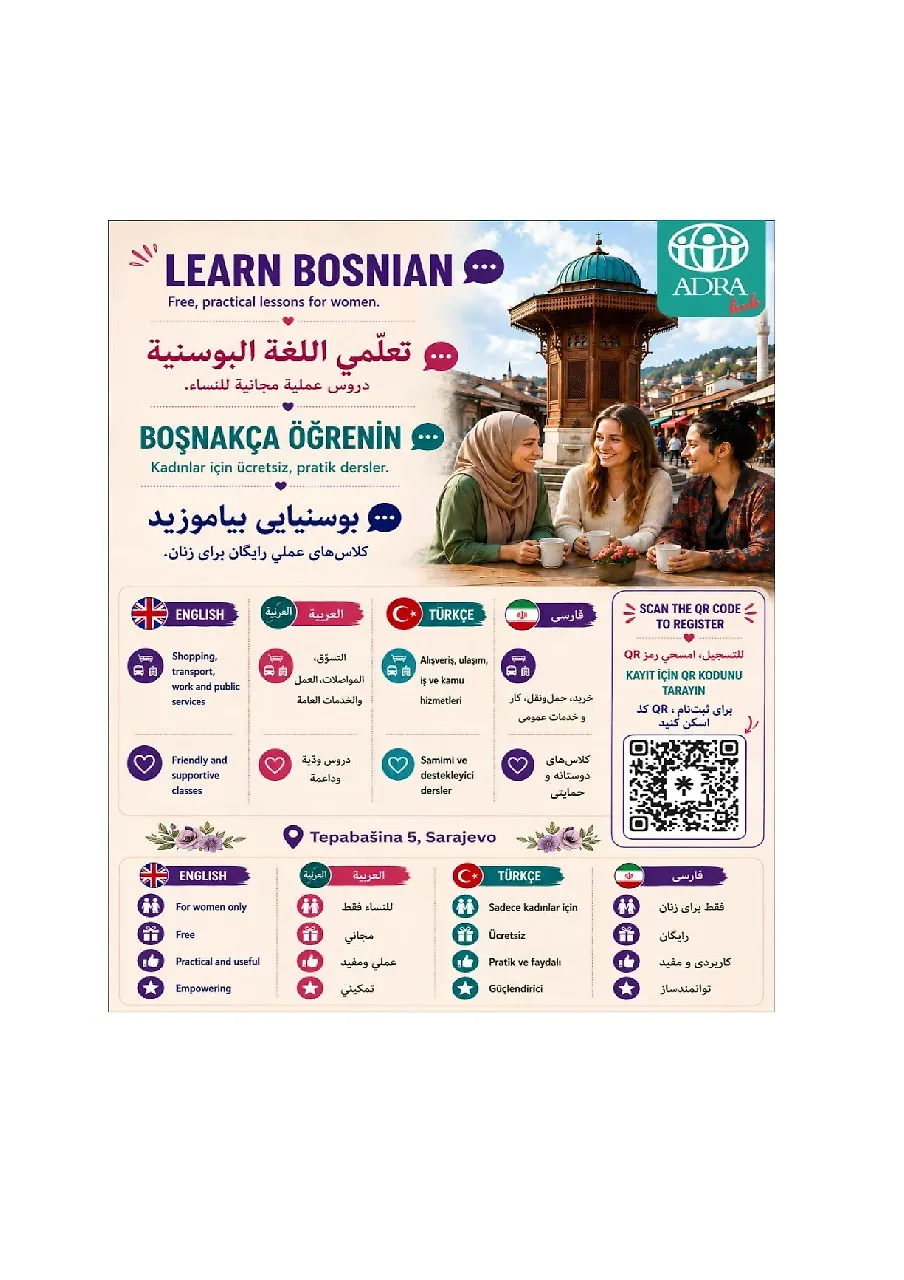
Курс почиње 6. августа 2026. године и одржаваће се у просторијама ADRA HUB-а (Тепебашина 5, Сарајево). Програм траје шест седмица, уз један сусрет седмично у трајању од 90 минута, а намијењен је групи до девет полазница почетног нивоа (A0–A1). Полазницама ће бити обезбијеђени бесплатни наставни материјали.
Поред усвајања основа босанског језика кроз теме из свакодневног живота, програм укључује и активности које доприносе упознавању локалне заједнице и лакшој интеграцији у друштво.
Уколико се пилот-пројекат покаже успјешним, ADRA планира да настави с организацијом редовних курсева и пратећих активности током јесени.
Министарство за људска права и избјеглице Босне и Херцеговине подржава ову иницијативу и позива институције и организације које раде са тражитељкама азила и особама под међународном заштитом да информацију о курсу прослиједе потенцијалним полазницама.
Пријава за курс врши се скенирањем QR кода на промотивном постеру, који је доступан на босанском, енглеском, арапском, турском и фарси језику.
Додатне информације доступне су путем електронске поште контакт особе ADRA Босне и Херцеговине: kerner.karin@gmail.com.
Bosnian Language Classes for Everyday Life
Community-Based Integration Pilot Initiative
Location: ADRA Hub, Tepebašina 5, Sarajevo
Contact person: Karin Kernerová (+387 671 455 654, kerner.karin@gmail.com)
Purpose of the Initiative
The initiative is being developed as a small community-based pilot programme that combines practical Bosnian language learning with community building, cultural understanding and social integration. We aim to offer a safe and welcoming space where participants can develop everyday communication skills, become more familiar with daily life and gain confidence in navigating their new environment.
The pilot is primarily intended for refugee and asylum-seeking women and young women, as we believe that a women-focused learning environment can foster trust, participation and confidence. At the same time, we welcome UNHCR's guidance on the most appropriate target group based on current needs and protection considerations.
The programme is envisioned as an integration activity – language learning combined with cultural integration. We would welcome UNHCR's guidance to ensure that it aligns with existing protection standards and responds to the actual needs of the community. The final structure of the pilot—including the target group, course content and format—remains open for discussion and adaptation in cooperation with UNHCR.
Proposed Pilot Format
Duration: 6 weeks
Frequency: 1 session per week
Session length: 90 minutes
Target group: young women and adult women
Group size: up to 9 participants
Level: Beginner (A0–A1)
Facilitator: Karin Kernerová
Potential Course Topics
These themes are intended as a starting point and can be adjusted based on participants' needs and UNHCR recommendations:
· introductions, greetings and basic conversation,
· numbers, time and appointments,
· family
· shopping and food,
· human body and healthcare
· public transport and navigation,
Learning materials would be printed for the participants. We are also considering the use of simple practical phrase cards/materials (e.g. “I need help”, “Where is the clinic?”, “I have an appointment”) to support immediate real-life communication.
Protection and Privacy Principles
No photos, personal stories or identifying information would be shared without explicit consent.
Only information necessary for participation would be collected.
The programme would remain non-political and respectful of participants' cultural and religious backgrounds.
In cases involving trauma, violence, legal concerns or other sensitive situations, participants would be referred to UNHCR or its designated partners rather than supported through informal or improvised solutions.